How to Measure a Roof Without Climbing On It
LandLens8 min read
Measure a roof from the ground: outline the footprint on a satellite map, find the pitch from the gable or a phone, then work out squares, bundles and waste.
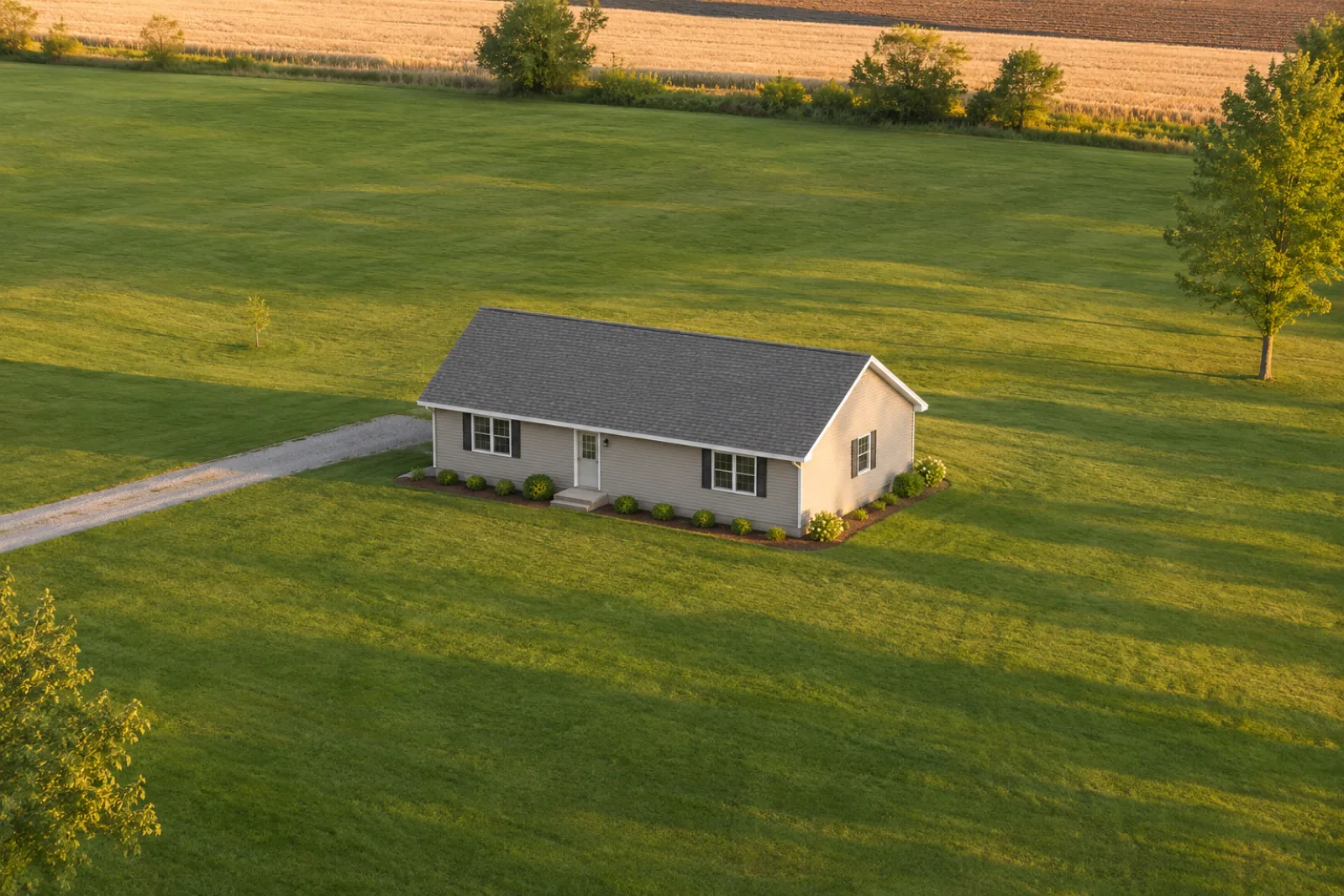
You can measure a roof without climbing on it in two steps. First, outline the roof on a satellite map to get its footprint seen from above, overhangs included. Second, find the pitch from the ground or the attic. Multiply the footprint by the pitch factor, divide by 100 for roofing squares, then add 10 to 15% waste.
Why measure from the ground
Climbing on a roof to measure it is slow and risky, which is why roofing estimators work from the ground, the attic or aerial images. A ground measurement is good for a budget, a first quote or checking a contractor's numbers. It can miss small details such as dormers, skylights or a low section hidden behind a ridge, so confirm the numbers on site or with an aerial roof report before you order materials or sign a bid.
What you need
- A phone with a satellite map app that measures area, such as LandLens
- A tape measure or a measuring wheel (to check one wall length)
- A level and a pencil if you can get into the attic
- A calculator, or the free roofing calculator
Try LandLens free
Step 1: Get the footprint from a satellite map
The footprint is the roof as seen from straight above, overhangs included. It is not the floor area of the house: the eaves stick out past the walls, and a garage or porch roof adds more.
- Open a satellite map of the house and zoom in until you can see the roof edges clearly.
- Tap a corner of the roof edge (the drip edge, not the wall), then tap each corner around the outline.
- Close the shape. The app shows the area seen from above, in square feet or square meters.
- Measure an attached garage or porch roof as its own shape if it has a different pitch.
- Check the result: measure one wall with a tape, add the overhang on both ends, and compare it with the same edge on the map.
In LandLens you draw this outline on the satellite map and the app gives you the area and the length of each side. If you prefer tape measures, the classic way works too: measure each outside wall, add the overhang, multiply length by width for each rectangle and add the parts together. See how to measure area on Google Maps for the limits of map tracing (image tilt and shadows can shift a roof edge by a little).
Step 2: Find the roof pitch from the ground
Pitch is the rise of the roof over 12 units of run, written like 6/12. A satellite map cannot show it, so you need one of these methods.
Method A: From the attic (most accurate)
- Mark 12 inches from one end of a level.
- Hold the level against the underside of a rafter and keep it level.
- Measure straight up from the 12-inch mark to the underside of the rafter.
- That number is the rise. A 4-inch rise means a 4/12 pitch.
Method B: From the gable end (no ladder)
- Measure the width of the gable wall at the ground (the wall only, not the overhangs) and halve it. That is the run.
- Count the siding courses from the base of the roof triangle up to the peak, and multiply by the exposed width of one course. That is the rise.
- Pitch = rise ÷ run × 12.
Example: a 28 ft gable wall gives a 14 ft run. Fourteen courses of siding with 6 inches showing give a 7 ft rise. 7 ÷ 14 × 12 = 6/12. Expect a close guess, not an exact value.
Method C: With a phone angle app
Stand back facing the gable end square-on, line up an angle finder or clinometer app with the sloped edge, and read the angle. Convert it: pitch = tan(angle) × 12. An angle of 26.6° is a 6/12 pitch. The slope calculator converts degrees, percent and ratios for you.
Step 3: Multiply by the pitch factor
A sloped roof has more surface than its footprint. The pitch factor is √(1 + (rise ÷ 12)²). Multiply the footprint by it.
| Pitch | Angle | Pitch factor | Roof surface for a 1,000 sq ft footprint |
|---|---|---|---|
| 3/12 | 14.0° | 1.031 | 1,031 sq ft |
| 4/12 | 18.4° | 1.054 | 1,054 sq ft |
| 5/12 | 22.6° | 1.083 | 1,083 sq ft |
| 6/12 | 26.6° | 1.118 | 1,118 sq ft |
| 7/12 | 30.3° | 1.158 | 1,158 sq ft |
| 8/12 | 33.7° | 1.202 | 1,202 sq ft |
| 9/12 | 36.9° | 1.250 | 1,250 sq ft |
| 10/12 | 39.8° | 1.302 | 1,302 sq ft |
| 12/12 | 45.0° | 1.414 | 1,414 sq ft |
The roof square footage calculator does this step for any pitch, in x/12 or degrees.
Step 4: Convert to squares, bundles and waste
Roofers order by the square: 1 roofing square = 100 sq ft of roof surface. Most asphalt shingles come about 3 bundles to a square, but heavier products can need more, so check the wrapper. Add waste for cuts: about 10% on a simple gable roof and 15% or more with hips and valleys.
| Step | Calculation | Result |
|---|---|---|
| Footprint from the satellite map | 1,800 sq ft | |
| Roof surface at 6/12 | 1,800 × 1.118 | 2,012 sq ft |
| Roofing squares | 2,012 ÷ 100 | 20.1 squares |
| With 10% waste | 20.1 × 1.10 | 22.1 squares |
| Shingle bundles | 22.1 × 3, rounded up | 67 bundles |
| Underlayment (1,000 sq ft rolls) | 2,012 × 1.10 = 2,214 sq ft ÷ 1,000, rounded up | 3 rolls |
Ridge caps, starter strips and flashing are extra. The roofing calculator runs the whole table with your own rates, in US or metric units.
Roofs with more than one pitch
Split the roof into sections and measure each one on its own: outline each section on the map, find its pitch, multiply, then add the surfaces together. A main roof at 8/12 with a porch at 3/12 gives a wrong total if you use one pitch for both. Hip roofs have the same pitch on all sides in most houses, so the footprint method still works, but plan on 15% waste or more because of the extra cuts.
How accurate is a ground measurement?
- Footprint: a clear, straight-down satellite image gives a good outline. Check one edge with a tape to catch tilt or a shadow.
- Pitch: the attic method is close to exact; gable counting and phone apps are estimates. One step off (6/12 instead of 7/12) changes the roof surface by about 3.6%.
- Details: dormers, chimneys, skylights and valleys are easy to miss from the ground. For a firm bid, confirm on site or with an aerial roof report.
Contractors who quote many jobs use the same footprint step for driveways, sod and fences; see LandLens for contractors.
Frequently asked questions
Can I measure my roof on Google Maps?
You can trace the footprint on any satellite map, but the map only shows the roof from above. You still need the pitch to get the real roof surface, because a sloped roof is bigger than its footprint.
How many squares is a 2,000 sq ft house roof?
It depends on the overhangs and the pitch, not on the floor area. A 2,000 sq ft footprint at 6/12 is about 2,236 sq ft of roof, or 22.4 squares before waste. Measure the footprint with overhangs for your own number.
How many bundles of shingles do I need per square?
Most standard asphalt shingles come 3 bundles to a square (100 sq ft). Some heavier or designer shingles need 4 or more. The wrapper lists the coverage per bundle.
What waste factor should I use for a roof?
About 10% for a simple gable roof and 15% or more for hip roofs and roofs with valleys, dormers or many cuts.
Is a phone app accurate enough to order shingles?
Not on its own. It is good for a budget, a first estimate or checking a quote. Before you order, check the pitch from the attic, look for sections the map hides, and ask the supplier or roofer to confirm the count.
Related tools & guides
Try LandLens free
Measure any land area, distance, or perimeter with your iPhone, iPad or Android phone. No equipment needed.
Share Your Feedback
Help us build a better LandLens. Request features, report bugs, or tell us what you think.