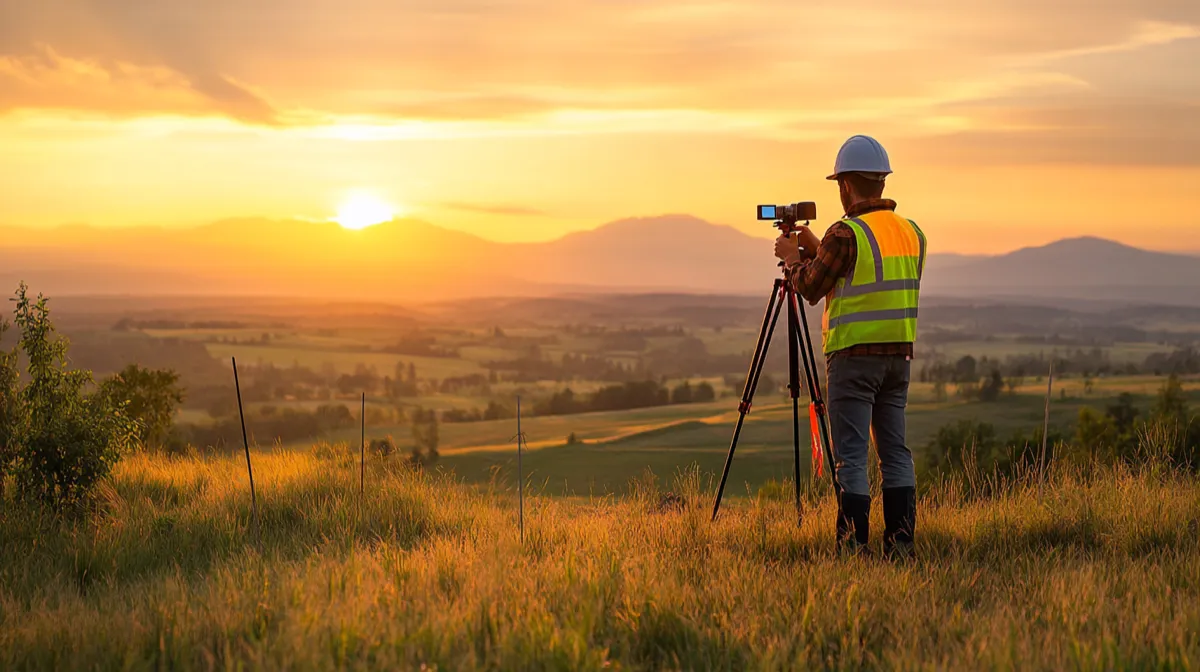
Why Land Measurement Units Are So Confusing
Land measurement is one of the oldest human activities, and it shows. Nearly every civilization developed its own system for quantifying land, usually based on whatever made practical sense at the time: how much a team of oxen could plow in a day, the area a person could seed before sundown, or the footprint of a standard dwelling. These units stuck around for centuries and became embedded in legal systems, property deeds, and cultural identity.
The result in 2026 is a patchwork of dozens of land area units still in active daily use. The United States and United Kingdom rely on acres. Most of continental Europe, Africa, and official government records worldwide use hectares. India alone has at least six commonly used traditional units whose exact size changes from one state to the next. Thailand, South Korea, Japan, Egypt, Turkey, and much of Latin America each have their own preferred units that predate the metric system and show no sign of disappearing.
This guide is a practical reference. It covers every major land measurement unit you are likely to encounter, gives you the actual conversion numbers people search for, and explains when and where each unit is used. If you need to measure land area with your phone and then communicate that measurement to someone in a different country or region, this is the article you need.
The Metric System: Square Meters and Hectares
The metric system brought order to measurement in most domains, and land is no exception -- at least on paper. The two metric units used for land are the square meter (sq m or m²) and the hectare (ha).
Square Meter (m²)
The square meter is the SI base unit for area. It is used for small plots, building footprints, and residential lots in most metric countries. One square meter is the area of a square with sides one meter long. For context, a typical single-car garage is about 15-20 sq m. A studio apartment in a city might be 25-40 sq m.
Hectare (ha)
The hectare is the practical unit for farms, estates, and larger land parcels. One hectare equals exactly 10,000 square meters. Visually, a hectare is roughly the area enclosed by a standard 400-meter running track, or about two and a half American football fields laid side by side.
Key conversions:
- 1 hectare = 10,000 sq m
- 1 hectare = 2.471 acres
- 1 hectare = 107,639 sq ft
- 1 sq km = 100 hectares
Government land records in over 100 countries officially use hectares. Even in countries where traditional units dominate daily conversation (such as India or Thailand), the hectare is the unit of record for cadastral surveys and legal documents. If you deal with international land transactions, hectares are the closest thing to a universal standard.
Imperial and US Customary Units: Acres, Square Feet, Square Yards
Acre
The acre is the primary land unit in the United States, the United Kingdom, Canada, and several Caribbean and Pacific nations. One acre equals 43,560 square feet, or approximately 4,046.86 square meters (0.4047 hectares). A football field including end zones is about 1.32 acres, so an acre is a bit smaller than a football field.
The word "acre" comes from Old English and originally meant "open field." In medieval England, it was defined as the area of land a yoke of oxen could plow in one day -- not exactly a precise scientific standard, but the number was standardized by statute centuries ago and has not changed since.
Key conversions:
- 1 acre = 4,046.86 sq m
- 1 acre = 0.4047 hectares
- 1 acre = 43,560 sq ft
- 1 acre = 4,840 sq yd
- 640 acres = 1 square mile (1 section)
Square Feet and Square Yards
In the US, smaller lots -- especially residential properties -- are often listed in square feet. One square foot equals 0.0929 sq m. A typical suburban lot in the US might be 7,000-12,000 sq ft (roughly one-sixth to one-quarter of an acre). Square yards (1 sq yd = 9 sq ft = 0.8361 sq m) appear less frequently in the US but are common in India and Pakistan for urban plots.
South Asian Units: Bigha, Katha, Cent, and Ground
South Asia is home to some of the most varied and confusing land measurement units on earth. The same word can mean very different sizes depending on which state, district, or even village you are in.
Bigha
Bigha is the most widely used traditional land unit across India, Nepal, and Bangladesh. Its defining characteristic is that it is not standardized. The size of one bigha varies dramatically by state:
- Uttar Pradesh, Madhya Pradesh, Chhattisgarh: 1 bigha = 2,529 sq m (about 0.625 acres)
- Rajasthan: 1 bigha = 1,618 sq m (about 0.4 acres)
- Bihar, Jharkhand: 1 bigha = 2,500 sq m (about 0.62 acres)
- West Bengal, Assam: 1 bigha = 1,338 sq m (about 0.33 acres)
- Himachal Pradesh: 1 bigha = 809 sq m (about 0.2 acres)
- Gujarat: 1 bigha = 1,936 sq m (about 0.478 acres)
This means a "10 bigha" plot in Himachal Pradesh is less than one-third the size of a "10 bigha" plot in Uttar Pradesh. Always confirm which region's definition is being used. Converting bigha to acres or bigha to hectares without knowing the state is meaningless.
As a rough guide: in UP, approximately 4 bigha = 1 hectare. In West Bengal, approximately 7.5 bigha = 1 hectare. In Rajasthan, approximately 6.2 bigha = 1 hectare.
Katha (Kattha)
Katha is a subdivision of bigha. In Bihar, 1 bigha = 20 katha, so 1 katha = 125 sq m. In West Bengal, 1 bigha = 20 katha as well, but since the bigha is smaller, 1 katha = 66.9 sq m. Like bigha, always ask which region's katha is being used.
Cent
The cent is used primarily in the southern Indian states of Kerala, Tamil Nadu, Karnataka, and Andhra Pradesh. One cent equals 40.47 sq m (435.6 sq ft). The math is straightforward: 100 cents = 1 acre. This makes the cent one of the more intuitive traditional units since it directly subdivides the acre by a factor of 100.
Ground
Ground is a unit specific to urban real estate in Tamil Nadu, particularly in Chennai. One ground equals 222.97 sq m (2,400 sq ft). Residential plots in Chennai are still commonly listed in grounds. One acre equals approximately 18.15 grounds.
Marla and Kanal (Pakistan, Punjab)
In Pakistan and parts of Indian Punjab, land is measured in marla and kanal. One marla equals 272.25 sq ft (25.29 sq m). One kanal equals 20 marla, which is 5,445 sq ft (505.86 sq m). Eight kanal make one acre. This system is deeply embedded in property markets across Punjab and is used for both residential and agricultural land.
Southeast Asian Units: Rai, Mu, and Pyeong
Rai (Thailand)
Thailand uses the rai as its primary land unit for all purposes -- agriculture, real estate, and government records. One rai equals 1,600 sq m (0.395 acres, or 0.16 hectares). Thai land is further subdivided into ngan and talang wah:
- 1 rai = 4 ngan
- 1 ngan = 100 talang wah
- 1 rai = 400 talang wah
- 1 talang wah = 4 sq m
Land prices in Thailand are almost always quoted per rai. To convert: 1 hectare = 6.25 rai, and 1 acre = 2.53 rai. A foreigner buying land in Thailand will encounter this unit on every listing, every title deed, and every conversation with a real estate agent.
Mu (China)
The mu (also written as mou) is China's traditional land unit and is still widely used in rural areas alongside the metric system. One mu equals 666.67 sq m (approximately one-fifteenth of a hectare). The conversion is clean: 15 mu = 1 hectare, and 1 mu = 0.1647 acres.
Chinese agricultural policy, rural land leases, and food production statistics frequently reference mu. When you read that China has "1.8 billion mu of arable land," that is 120 million hectares.
Pyeong (South Korea)
The pyeong is South Korea's traditional area unit, equivalent to approximately 3.306 sq m (35.58 sq ft). It is identical in size to the Japanese tsubo. South Korea officially switched to metric in 2007, but pyeong remains the dominant unit in real estate listings, apartment sizes, and everyday conversation. A typical Korean apartment might be described as "30 pyeong" (about 99 sq m or 1,066 sq ft). One hectare equals approximately 3,025 pyeong.
Middle Eastern and African Units: Feddan and Dunam
Feddan (Egypt, Sudan)
The feddan is the primary land unit in Egypt and Sudan. One feddan equals 4,200.83 sq m (approximately 1.038 acres or 0.42 hectares). The feddan is slightly larger than an acre, which makes rough conversions convenient: 1 feddan is approximately equal to 1 acre for back-of-envelope calculations. Egypt's entire agricultural sector -- the Nile Delta farmland, desert reclamation projects, and government land allocations -- uses feddans as the standard unit.
One feddan is subdivided into 24 kirat. One kirat equals 175.03 sq m.
Dunam / Donum (Turkey, Middle East)
The dunam (also spelled donum or dunum) is used across Turkey, Israel, Palestine, Jordan, Iraq, and other parts of the former Ottoman Empire. In its modern standardized form, one dunam equals 1,000 sq m (0.1 hectares, or 0.247 acres). This makes conversion simple: 10 dunam = 1 hectare.
Older definitions vary -- the Ottoman dunam was approximately 919.3 sq m, and some Iraqi regions historically used a 2,500 sq m dunam -- but the 1,000 sq m version is the accepted standard today. Israeli and Palestinian land records, Turkish agricultural statistics, and Jordanian property listings all use the standardized dunam.
Latin American Units: Manzana, Cuerda, and Caballeria
Manzana
The manzana is used in several Central American and some South American countries, but its size varies considerably. In Costa Rica, one manzana equals 6,988 sq m (0.6988 hectares, about 1.727 acres). In Nicaragua, one manzana equals approximately 7,026 sq m. In Honduras, the figure is similar. In Argentina, one manzana refers to a city block, which is roughly 10,000 sq m (1 hectare) -- a different concept entirely.
The word literally means "apple" or "city block" in Spanish, and its dual meaning reflects the unit's informal origins.
Cuerda (Puerto Rico)
The cuerda is the standard land unit in Puerto Rico. One cuerda equals 3,930 sq m (0.393 hectares, or 0.971 acres). A cuerda is very close to an acre in size, which makes conversions between US and Puerto Rican land records relatively painless. Land listings, agricultural statistics, and property deeds in Puerto Rico all use cuerdas.
Caballeria
The caballeria is a large traditional land unit used historically in Cuba, Mexico, and other parts of Latin America. In Cuba, one caballeria equals 134,202 sq m (13.42 hectares, or 33.16 acres). In Mexico and Central America, the caballeria was historically around 42.6 hectares (105.3 acres), though the exact figure varied by region and era. The unit originated as the land grant given to a mounted soldier (caballero) during the colonial period.
European Traditional Units: Morgen, Stremma, and Tsubo
Morgen (Germany, South Africa, Netherlands)
The morgen (German for "morning") was defined as the amount of land a person could plow in a single morning. In South Africa, where the unit persisted longest, one morgen equals 8,565.3 sq m (0.8565 hectares, or 2.116 acres). The Dutch morgen was slightly different at approximately 8,516 sq m. While Germany and the Netherlands have fully transitioned to metric, you may still encounter morgen in historical South African property deeds and older farm records.
Stremma (Greece)
The stremma is Greece's traditional land unit. One stremma equals 1,000 sq m (0.1 hectares), making it identical in size to the modern dunam. The relationship is simple: 10 stremma = 1 hectare. Greek agricultural land, olive groves, and rural properties are still commonly described in stremma. You will encounter it in property listings on Greek islands and throughout the mainland.
Tsubo (Japan)
One tsubo equals approximately 3.306 sq m (35.58 sq ft). The unit derives from the traditional tatami mat: two standard tatami mats laid side by side equal one tsubo. Japanese real estate listings routinely quote sizes in tsubo alongside square meters. A typical suburban house lot might be 40-60 tsubo (132-198 sq m). One hectare equals approximately 3,025 tsubo. Despite Japan's official adoption of the metric system, tsubo remains deeply ingrained in the property market.
Quick Conversion Reference Table
The following table covers the most commonly searched land unit conversions. Bookmark this for quick reference.
| From | To | Multiply by |
|---|---|---|
| 1 Acre | Hectares | 0.4047 |
| 1 Acre | Square meters | 4,046.86 |
| 1 Acre | Square feet | 43,560 |
| 1 Hectare | Acres | 2.471 |
| 1 Hectare | Square meters | 10,000 |
| 1 Hectare | Rai | 6.25 |
| 1 Hectare | Mu | 15 |
| 1 Hectare | Dunam | 10 |
| 1 Hectare | Stremma | 10 |
| 1 Hectare | Bigha (UP) | 3.95 |
| 1 Hectare | Bigha (West Bengal) | 7.47 |
| 1 Hectare | Tsubo / Pyeong | 3,025 |
| 1 Hectare | Feddan | 2.38 |
| 1 Acre | Kanal | 8 |
| 1 Acre | Cent | 100 |
| 1 Acre | Rai | 2.53 |
| 1 Rai | Square meters | 1,600 |
| 1 Mu | Square meters | 666.67 |
| 1 Feddan | Square meters | 4,200.83 |
| 1 Dunam | Square meters | 1,000 |
| 1 Kanal | Square meters | 505.86 |
| 1 Marla | Square meters | 25.29 |
| 1 Cuerda | Square meters | 3,930 |
| 1 Manzana (Costa Rica) | Hectares | 0.6988 |
| 1 Morgen (South Africa) | Hectares | 0.8565 |
| 1 Tsubo | Square meters | 3.306 |
| 1 Square mile | Acres | 640 |
| 1 Square mile | Hectares | 259 |
How LandLens Handles Unit Conversion
With this many units in circulation, manual conversion is tedious and error-prone. LandLens supports over 20 land measurement units on iPhone and iPad, covering every unit discussed in this article and more. When you walk or trace the boundary of a piece of land, LandLens calculates the area using GPS accuracy that modern phones provide and displays the result in whatever unit you choose.
The workflow is simple: measure once, then switch units instantly. Tap the unit label and the same measured area is displayed in hectares, acres, bigha, rai, mu, dunam, pyeong, square feet, or any other supported unit. There is no need to look up conversion factors or type numbers into a calculator. If you are comparing land in Thailand (priced in rai) with land in India (described in bigha), LandLens shows both in a common unit so you can make an apples-to-apples comparison.
You can also set a default unit in LandLens settings so that every measurement you take is automatically shown in the unit you use most. A farmer in Rajasthan can default to bigha. An agronomist in Egypt can default to feddan. A surveyor in Turkey can default to dunam. Once your default is set, every new measurement -- whether you draw it on the map, walk the perimeter with GPS tracking, or drop pins manually -- appears in your preferred unit with no extra steps.
Beyond just viewing area, LandLens lets you calculate fertilizer needs and other per-area inputs based on your measured fields, automatically adjusting for whichever unit system you are working in.
Which Unit Should You Use?
The short answer: use whatever unit your local market, legal system, or counterpart expects. Here is a practical breakdown by region and profession:
By Country or Region
- United States, United Kingdom, Canada: Acres for agricultural and rural land; square feet for residential lots and buildings.
- Continental Europe: Hectares and square meters. Greece may use stremma in informal contexts.
- India: Varies by state. Bigha in the north (UP, Bihar, Rajasthan, West Bengal). Cent and ground in the south (Kerala, Tamil Nadu). Hectares in official government records. Square yards for urban plots.
- Pakistan: Marla and kanal for residential; acres for agricultural land.
- Thailand: Rai, ngan, and talang wah for everything.
- China: Mu in rural areas; square meters in cities.
- Japan and South Korea: Tsubo (Japan) and pyeong (Korea) in real estate; square meters officially.
- Egypt, Sudan: Feddan.
- Turkey, Israel, Jordan: Dunam.
- Central America: Manzana (Costa Rica, Nicaragua, Honduras).
- Puerto Rico: Cuerda.
- Brazil: Hectares officially; alqueire in rural markets (varies by state).
By Profession
- Farmers and ranchers: Use whatever your local agricultural market uses. In the US, that is acres. In Thailand, rai. In India, bigha or hectares depending on state and context.
- Real estate agents: Match the unit to your listing market. US residential uses square feet; Thai listings use rai; Korean apartments use pyeong.
- Surveyors and engineers: Hectares and square meters for international work. Local units for domestic projects. Always document which unit definition you are using, especially for bigha and alqueire.
- International development and NGOs: Hectares. This is the global standard for aid programs, environmental monitoring, and agricultural development reports.
- Researchers and academics: Hectares and square kilometers. Peer-reviewed journals expect metric units.
When in Doubt
If you are communicating across borders, lead with hectares and provide the local unit in parentheses. For example: "The plot is 2.5 hectares (approximately 10 bigha in UP terms)." This gives your audience both the universal reference and the local context.
LandLens makes this easy by letting you view any measurement in multiple units simultaneously. Measure the land once, and you have the number in every format you could need -- no conversion tables required, no second-guessing whether you used the right multiplier. The land does not change size; only the label does.
Related tools & guides
Try LandLens free
Measure any land area, distance, or perimeter with your iPhone, iPad or Android phone. No equipment needed.
Share Your Feedback
Help us build a better LandLens. Request features, report bugs, or tell us what you think.