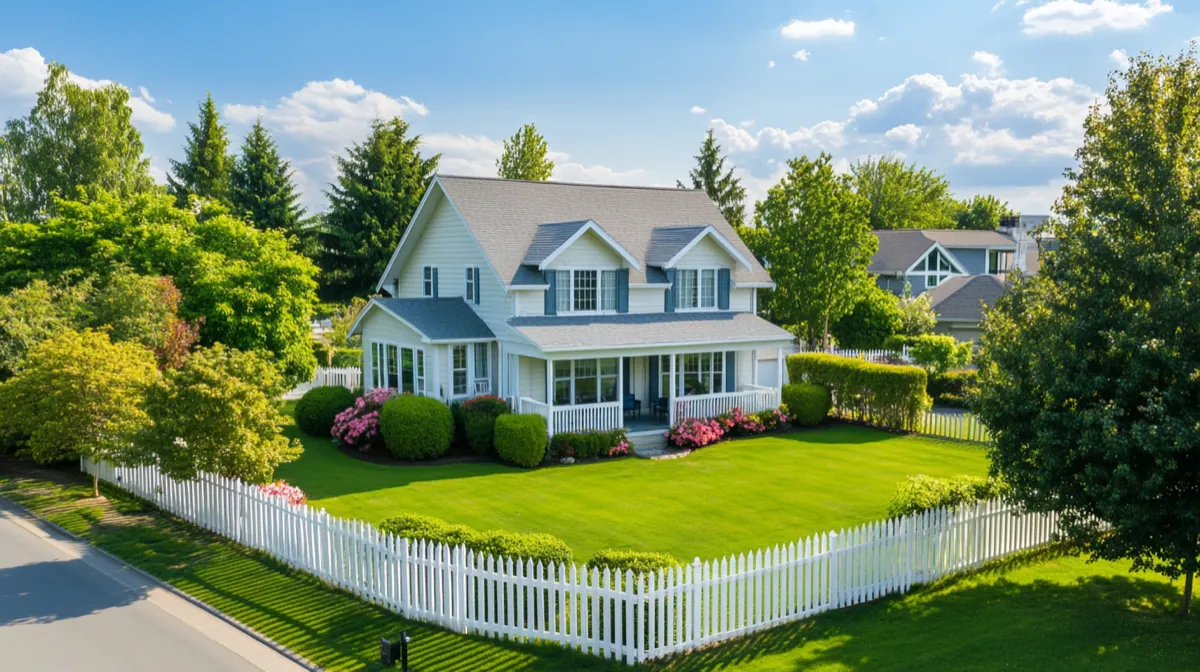
Why Accurate Yard Measurements Save You Money
Every landscaping project begins with one question: how much material do I need? The answer depends entirely on knowing the size of the area you are working with. Get that number wrong and you either run short halfway through the job or end up with expensive leftovers sitting in your driveway.
The financial impact is real. Sod runs $0.30 to $0.85 per square foot. Mulch costs $30 to $45 per cubic yard. Concrete is $140 to $160 per cubic yard delivered. On a moderately sized project, even a 10-15% measurement error translates to hundreds of dollars wasted. For example, ordering 10% too much mulch on a 2,000 square foot bed at 3 inches deep means roughly 0.6 extra cubic yards, or about $150 you did not need to spend. Do the same thing across sod, topsoil, and edging materials for a full yard renovation and you could be looking at $500 or more thrown away.
Beyond the material cost, there is the time cost. A second trip to the supply yard burns half a Saturday. Having a pallet of sod delivered that you cannot use before it dries out is worse than not ordering enough in the first place. Accurate measurements up front eliminate both problems.
Tools You Can Use to Measure Your Yard
There are several ways to get yard measurements, and each has trade-offs in accuracy, speed, and cost.
Tape Measure
The classic 100-foot tape measure is cheap and precise for straight lines. If your yard is a perfect rectangle, measure the length and width, multiply them together, and you have your square footage. The problem is that most yards are not perfect rectangles. Curved borders, angled lot lines, garden bed cutouts, and irregular property shapes all make tape measure math complicated. You end up breaking the yard into dozens of smaller triangles and rectangles, measuring each one, and adding them all up. This is slow, tedious, and prone to arithmetic mistakes.
Best for: Small, rectangular areas like a single garden bed or a straight fence run.
Drawbacks: Very slow for large or irregular yards. Requires a helper to hold the other end. Easy to make calculation errors.
Measuring Wheel
A measuring wheel lets you walk the perimeter and read the total distance from a counter. It is faster than a tape for long distances and you can do it solo. However, you still only get the perimeter length, not the area. You would need to record multiple straight-line segments and calculate the area from those dimensions, which brings you back to the same geometry problem as the tape measure.
Best for: Measuring fence line distance or long straight edges.
Drawbacks: Does not directly give you area. Struggles on rough or hilly terrain where the wheel bounces.
Phone GPS App
A GPS measurement app on your iPhone or iPad lets you trace any shape on a satellite map and instantly get the area and perimeter. It does not matter if the boundary has 4 sides or 40, or if the edges curve. You tap points around the perimeter on the map, and the app calculates the enclosed area automatically. Modern phone GPS is accurate to about 3-5 meters outdoors, but when you are placing points on a high-resolution satellite image, you can achieve much better precision by visually aligning your taps with visible features like fence lines, driveways, and garden borders.
Best for: Any yard shape, especially irregular lots. Fast, free or low-cost, and you already have the device in your pocket.
Drawbacks: Accuracy depends on satellite image quality and your care in placing points. Not ideal for measurements that need sub-inch precision.
Drone Mapping
Drone photogrammetry can produce centimeter-accurate orthomosaic maps of your property. Professional land surveyors sometimes use this method for large parcels.
Best for: Large properties, professional surveys, or situations where you need extremely high accuracy.
Drawbacks: Expensive equipment (a mapping-capable drone starts around $1,000). Requires software to process the images. Significant overkill for a typical residential landscaping project.
For most homeowners tackling a weekend landscaping project, a GPS app on your phone hits the sweet spot of speed, accuracy, and cost. It handles irregular shapes effortlessly and gives you both area and perimeter in seconds.
How to Measure Your Yard with LandLens
LandLens is a free GPS measurement app for iPhone and iPad that makes measuring irregular yards straightforward. Here is how to measure your yard step by step, even if it has curves, cutouts, and odd angles.
Watch how to measure your yard for landscaping in under 2 minutes
- Open LandLens and switch to satellite view. The satellite imagery lets you see your actual property, including lawn edges, garden beds, driveways, and structures. Pinch to zoom in until your yard fills the screen. You want enough detail to see where the grass meets the garden beds.
- Tap the draw button and start tracing. Tap along the edge of the area you want to measure. Start at any corner and work your way around the perimeter. For straight edges like a fence line or driveway border, two taps at each end are enough. For curved edges like a rounded garden bed or a cul-de-sac property line, place taps closer together to follow the curve smoothly. More taps on curves means a more accurate outline.
- Close the shape. When you get back to your starting point, close the polygon. LandLens instantly calculates the total area and perimeter. The area appears in square feet, square meters, acres, or whichever land measurement units you prefer.
- Handle cutouts and exclusions. If your lawn has a pool, patio, or large garden bed in the middle that will not receive sod or seed, measure the main lawn area first, then measure the cutout area separately. Subtract the cutout from the total. For example, if your backyard measures 3,200 sq ft and the pool area is 480 sq ft, your actual lawn area is 2,720 sq ft.
- Save and label your measurements. Name each measurement something descriptive like "Front lawn," "Side yard strip," or "Back patio mulch bed." You will reference these numbers when ordering materials, and you will want them again next year when you remulch or reseed. LandLens keeps everything saved on your device so you do not have to remeasure.
The whole process takes about five minutes per area. For a typical residential lot with a front yard, backyard, and a few garden beds, you can have all your measurements done in under half an hour.
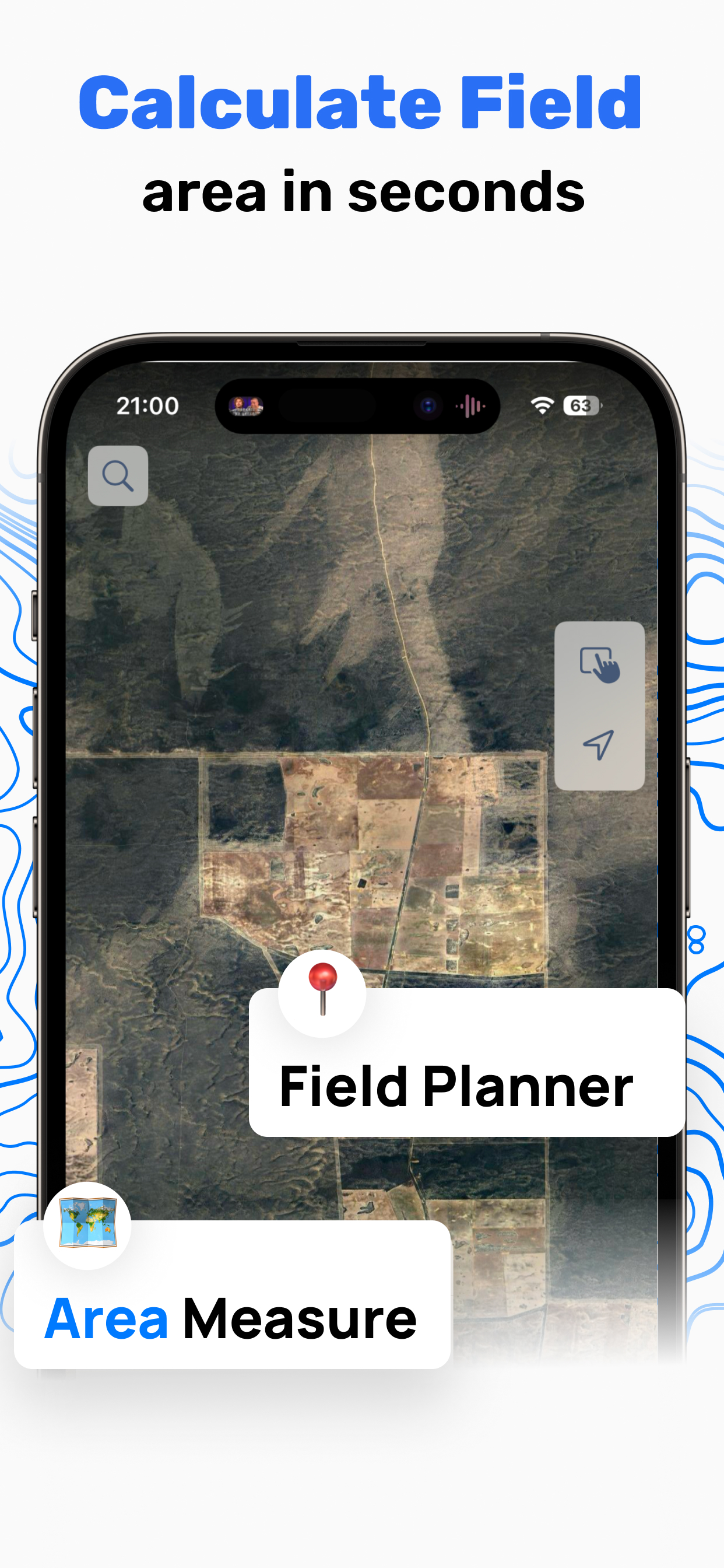
Tracing yard boundaries on satellite view
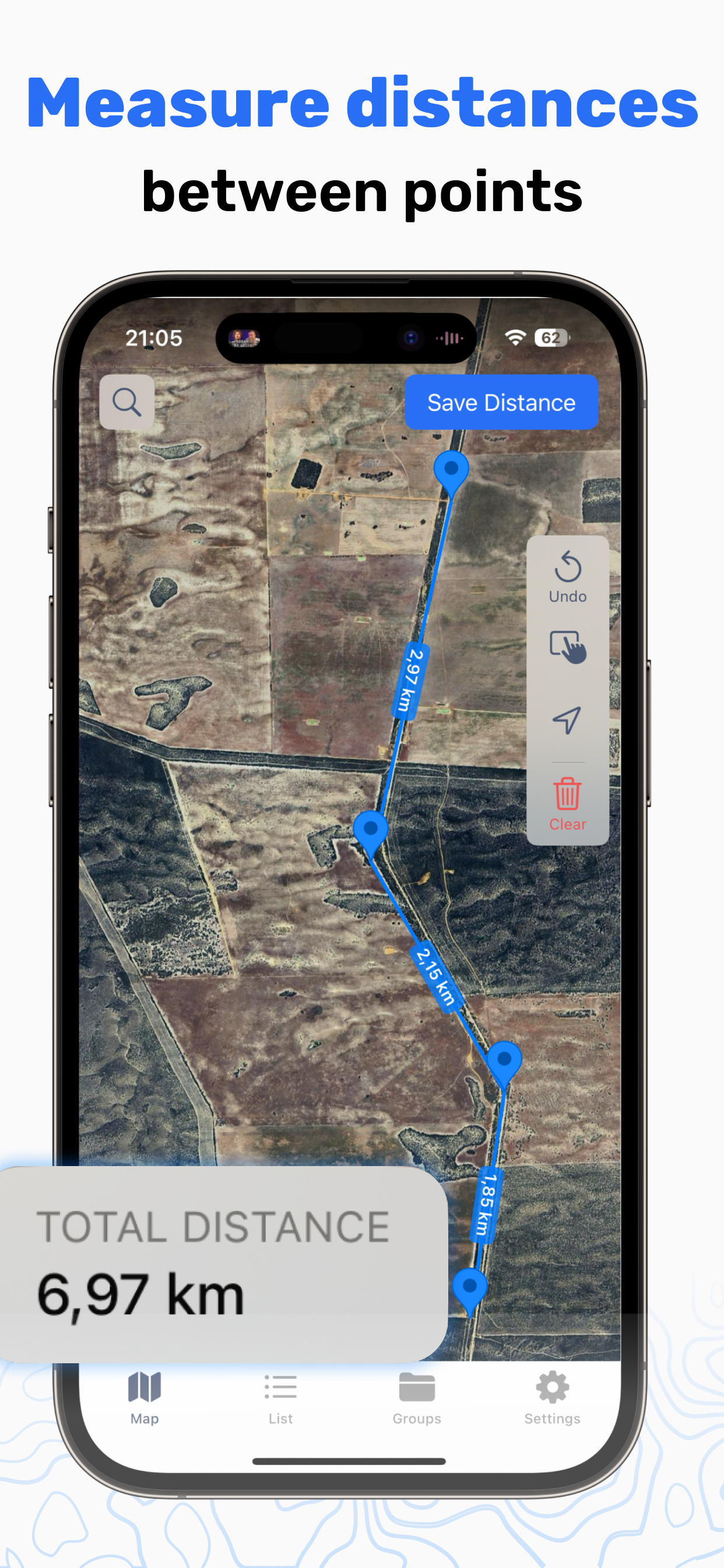
Instant area calculation for material ordering
💰 Quick Savings Calculator
A 10% measurement error on common projects:
- 2,000 sq ft sod job: $110-170 wasted
- 1,500 sq ft mulch bed: $135-200 wasted
- 300 sq ft concrete patio: $420-480 wasted
Total potential waste: $665-850
Calculating Sod and Grass Seed
Sod
Sod is sold by the square foot or by the pallet. A standard pallet covers roughly 450 to 500 square feet depending on the grass variety and the supplier. Prices range from $250 to $450 per pallet for common varieties like Bermuda, fescue, or Kentucky bluegrass.
Formula: Lawn area (sq ft) x 1.05 (5% waste factor for cuts and edges) = Total sod needed (sq ft)
Example: Your front lawn measures 1,850 sq ft. Add the 5% waste factor: 1,850 x 1.05 = 1,943 sq ft. At 450 sq ft per pallet, that is 4.3 pallets, so you order 5. At $280 per pallet, your cost is $1,400. Without measuring, you might guess you need 6 pallets, wasting $280, or guess 4 pallets and come up 43 sq ft short, leaving a bare patch until the next delivery.
Grass Seed
Grass seed coverage rates vary significantly by species. Here are typical rates for new lawns (overseeding uses roughly half these amounts):
- Kentucky Bluegrass: 2-3 lbs per 1,000 sq ft
- Tall Fescue: 6-8 lbs per 1,000 sq ft
- Bermuda Grass: 1-2 lbs per 1,000 sq ft
- Perennial Ryegrass: 8-10 lbs per 1,000 sq ft
Example: You are seeding a 2,400 sq ft backyard with tall fescue. At 7 lbs per 1,000 sq ft: 2,400 / 1,000 x 7 = 16.8 lbs. A typical bag is 10 or 20 lbs, so you buy one 20 lb bag. At $55 to $75 per bag, precise measurement keeps you from buying two bags when one will do.
Calculating Mulch and Topsoil
Both mulch and topsoil are sold by the cubic yard. To go from a flat area measurement to a volume, you multiply by the depth you want, then convert to cubic yards.
Formula: Area (sq ft) x Depth (in inches) / 324 = Cubic yards needed
The number 324 is a shortcut that combines the conversion from inches to feet (divide by 12) and from cubic feet to cubic yards (divide by 27). It saves you a step: 12 x 27 = 324.
Mulch
Most garden beds get 2 to 3 inches of mulch. Two inches is a light refresh, and 3 inches provides good weed suppression and moisture retention.
Example: Your garden beds total 780 sq ft across the front and back yard. You want 3 inches of hardwood mulch. 780 x 3 / 324 = 7.2 cubic yards. Round up to 7.5 or 8. At $40 per cubic yard delivered, that is $300 to $320. If you had guessed the beds were about 1,000 sq ft (a common overestimate), you would have ordered 9.3 cubic yards and spent an extra $80 or more for mulch you have no place to put.
Topsoil
Topsoil for leveling or raised bed filling is usually applied at 4 to 6 inches. For topdressing an existing lawn, 1 to 2 inches is standard.
Example: You are leveling a 600 sq ft section of your backyard with 4 inches of topsoil. 600 x 4 / 324 = 7.4 cubic yards. Topsoil runs $25 to $50 per cubic yard depending on quality and delivery distance, so this job costs roughly $185 to $370 in material.
Calculating Concrete and Pavers
Concrete
Poured concrete for a patio or walkway is typically 4 inches thick. Concrete is sold by the cubic yard or in 80 lb bags (each bag makes about 0.6 cubic feet).
Formula: Area (sq ft) x Thickness (in inches) / 324 = Cubic yards
Example: You are pouring a patio that measures 320 sq ft at 4 inches thick. 320 x 4 / 324 = 3.95 cubic yards. Add a 10% waste factor for a formed pour: 3.95 x 1.10 = 4.35, so you order 4.5 cubic yards. At $150 per cubic yard for ready-mix delivered, that is $675. Ordering 5.5 yards because you eyeballed the patio dimensions would cost you an extra $150.
Pavers
Pavers are sold by the square foot or by the pallet. The critical number here is the waste factor. Rectangular layouts with straight cuts need 5-8% extra. Complex patterns, curves, or diagonal layouts need 10-15% extra because more pavers get cut and discarded.
Example: A walkway area measures 185 sq ft with a gentle curve. You choose a herringbone pattern, so you add 12% for waste: 185 x 1.12 = 207 sq ft of pavers. At $4 to $8 per square foot for mid-range pavers, your material cost is $828 to $1,656. Getting the base measurement right is the difference between one order and an expensive supplemental delivery of pavers from a potentially different dye lot.
Planning Irrigation Systems
If you are installing a sprinkler or drip irrigation system, your yard measurements directly determine how many zones you need, what sprinkler heads to buy, and how much pipe to run.
Coverage Zones
Rotary sprinkler heads typically cover a 25 to 50 foot radius depending on water pressure and the model. Pop-up spray heads cover 8 to 15 feet. To figure out how many heads you need, divide your lawn into zones where each zone can be covered by the throw radius of your chosen heads with adequate overlap (head-to-head coverage is the standard recommendation, meaning each head throws water all the way to the next head).
Knowing the exact dimensions of each lawn section lets you pick the right heads. A narrow 8-foot side yard strip needs short-throw spray heads, not the 40-foot rotary heads you would use on the main backyard.
Pipe Length from Perimeter
Mainline and lateral pipes generally follow the perimeter of each zone plus a supply run back to the valve box. The perimeter measurement from your GPS app gives you a solid starting estimate. As a rule of thumb, plan for pipe length equal to roughly 1.2 to 1.5 times the perimeter to account for the supply run and connections.
Example: Your backyard perimeter is 210 feet. At 1.3x, budget for about 273 feet of PVC lateral pipe. At $0.50 to $0.80 per foot for 3/4-inch PVC, that is $137 to $218 in pipe alone. You can use LandLens to measure your property boundaries and get an exact perimeter to work from.
Working with Landscaping Contractors
Having your own measurements before you call a contractor changes the entire dynamic of the conversation. Here is why.
You can verify their quote. A reputable contractor will measure your yard themselves, but some estimate by eye or round up aggressively. If a contractor quotes you for 3,500 sq ft of sod and you know from your measurements that the lawn is 2,800 sq ft, you can ask them to explain the discrepancy. Sometimes the difference is a legitimate waste factor. Sometimes it is padding.
You can compare bids on equal terms. When you tell three contractors "I need sod for 2,800 square feet of lawn," they are all bidding on the same scope. Without that number, each contractor measures differently, and you end up comparing quotes that assume different square footages, making it impossible to tell who is actually cheaper.
You avoid scope creep. Knowing your exact measurements means you can define the project precisely. "Mulch these beds, they total 620 sq ft, at 3 inches deep" is a much tighter scope than "mulch the front garden beds." The tighter the scope, the less room for unexpected charges.
Cost check example: A contractor bids $4,200 to sod your front and back lawns. You measured 3,100 sq ft total in LandLens. That works out to $1.35 per sq ft, which includes soil prep, delivery, and installation. The going rate in most markets is $1.00 to $2.00 per sq ft installed, so the bid is reasonable. Without your own measurement, you would have no way to do this quick sanity check.
Dealing with Slopes and Irregular Shapes
Flat rectangles are easy to measure. Real yards are rarely flat or rectangular. Here is how to handle the common complications.
Slopes and Hills
GPS and satellite measurements give you the "plan area," which is the area as viewed from directly above. On a slope, the actual ground surface is larger than the plan area because the terrain is tilted. For gentle slopes under about 15 degrees, the difference is less than 4% and usually falls within your waste factor. For steeper slopes, you may want to add an extra 5-10% to your material estimate.
A rough guideline:
- 0-10 degree slope: No adjustment needed (less than 2% difference)
- 10-20 degree slope: Add 5% to your area calculation
- 20-30 degree slope: Add 10-15% to your area calculation
- Over 30 degrees: This is steep enough that most landscaping materials (sod, mulch) require special installation techniques anyway. Consult a professional.
Irregular Shapes
This is where a GPS measurement app truly outperforms manual methods. With a tape measure, an L-shaped yard requires you to split it into two rectangles, measure each one, and add them. A yard with a curved cul-de-sac frontage requires you to approximate the curve with straight segments and use geometry formulas. A yard with a kidney-shaped pool cutout requires even more math.
With a GPS app, you simply trace the actual shape, no matter how irregular. The app calculates the polygon area directly. A 40-point polygon that follows every curve and angle of your yard takes the same effort as a simple 4-point rectangle. This is especially valuable for measuring oddly shaped garden beds, curved pathways, and lots with non-perpendicular property lines.
Multiple Levels and Terraced Yards
If your yard has distinct terraced levels, measure each level as a separate area. This is better than trying to trace the entire yard as one shape because you will likely be applying different materials or different depths to each level. Label them clearly: "Upper terrace," "Lower lawn," "Retaining wall bed." When it comes time to order, you can total them up or order for each section independently.
Common Mistakes That Lead to Ordering Too Much or Too Little
After years of homeowners measuring (and mismeasuring) their yards, certain mistakes come up repeatedly:
- Forgetting to subtract hardscape. Your backyard might be 4,000 sq ft according to the property survey, but that includes the patio, the shed footprint, the driveway apron, and the pool deck. The actual lawn area might be 2,600 sq ft. Always subtract non-lawn areas before ordering sod or seed.
- Measuring the whole yard when you only need part of it. If you are only mulching the front beds, do not measure the side and back beds "just in case." Measure exactly what you plan to cover this season.
- Ignoring the waste factor. Sod needs to be cut at every edge and obstacle. Pavers get cut at every border. A 0% waste assumption guarantees you will come up short. Use 5% for sod, 5-10% for mulch and gravel, 10% for concrete, and 10-15% for pavers with complex patterns.
- Using the wrong depth. Three inches of mulch requires 50% more material than two inches. Make sure you know what depth you want before plugging numbers into the formula. If you are refreshing existing mulch that has decomposed to about 1 inch, you only need 1-2 inches of new mulch, not a full 3 inches.
- Confusing square feet with linear feet. Area (square feet) is for surfaces: sod, mulch, pavers. Perimeter (linear feet) is for edges: fencing, edging, borders. Mixing these up leads to wildly wrong orders. Your 2,000 sq ft lawn does not need 2,000 feet of fencing.
- Relying on property records for lot size. Your property tax record says the lot is 8,500 sq ft. That is the total lot including the house footprint, driveway, sidewalk, and everything else. The actual landscapable area could be half that or less.
- Rounding too aggressively. Rounding 5.2 cubic yards up to 6 is sensible. Rounding up to 8 "just to be safe" costs you $80 in extra mulch you do not need. Measure carefully, apply an appropriate waste factor, and round up to the next half or whole unit. That is enough buffer without being wasteful.
Getting Started
Every landscaping project goes more smoothly when you start with real numbers instead of guesses. Whether you are laying sod, spreading mulch, pouring a patio, or just getting quotes from contractors, having accurate square footage and perimeter measurements puts you in control.
LandLens is free to download on the App Store for iPhone and iPad. Open the app, switch to satellite view, and trace your yard. In five minutes you will have the area, perimeter, and the confidence to order exactly the right amount of material. Save your measurements and you will have them ready for every future project, from this spring's mulch refresh to next year's patio expansion.
Start by measuring one area this weekend. Front lawn, backyard, or that garden bed you have been meaning to mulch. Once you see how fast it is, you will want to measure everything.
Related tools & guides
Try LandLens free
Measure any land area, distance, or perimeter with your iPhone, iPad or Android phone. No equipment needed.
Share Your Feedback
Help us build a better LandLens. Request features, report bugs, or tell us what you think.